Blog

DIGRA Leadership in Action: Insights from Youth IGF Ghana 2023

In the rapidly evolving digital landscape, the role of youth in steering the course of Internet Governance is paramount. At DIGRA, we stand at the forefront of this change, championing the cause of meaningfully engaging youth in Internet Governance across the globe. Our global community, spanning various countries, is a testament to our commitment to this cause. Osei Manu Kagyah from Ghana stands out as a dedicated member of our community, working toward building a youth-led digital space. While our reach is global, it is the individual stories of leaders like Osei that truly encapsulate the essence of our mission. We recently sat down with Osei to delve deeper into his experiences, insights, and aspirations for the digital future. Here’s our conversation with him.


DIGRA: Osei, it is wonderful to reconnect with you. We have been keenly following your leadership at the Youth IGF Ghana, and it is great to discuss it further. Also, a big thank you for inviting the DIGRA team to speak at the event. It was an honor.


Osei: Absolutely! When Lily Edinam Botsyoe and I were shaping the program’s agenda, I immediately thought of the talented individuals I knew at Digital Grassroots. Given my association as a fellow, it seemed fitting to invite them for a keynote. Lily brought up Uffa’s (Uffa Modey, Digital Grassroots Global Lead) name, which was a fantastic suggestion. Uffa joined us at the opening ceremony with a powerful keynote, emphasising the importance of solidarity. 


DIGRA: Can you share your personal experience in shaping and implementing this event?


Osei: Certainly, thank you for asking. The experience was genuinely fulfilling for me. Reflecting on my journey, being part of the ISOC Youth Ambassador program and the Digital Grassroots cohort in 2021, I feel I have come quite a distance. I played a pivotal role in organizing this program and represented the Ghana IGF. Our youth event preceded the main one, and during the main event, I presented our discussions from the previous day. Key figures from the digital ecosystem were present, and the entire experience felt deeply rewarding. Additionally, we showcased a documentary reviewing the Digital Grassroots Internet report during our program.


DIGRA: From your leadership at the youth IGF, what insights or lessons can you share?


Osei: During our program, our primary focus was fostering resilience among Ghanaian youth, aligning with the main IGF agenda of building a secure and sustainable digital future. We derived several key insights from our discussions:


The youth must not only grasp internet opportunities but also uphold ethical standards.


Enhancing digital literacy programs is crucial to bridge knowledge gaps and ensuring equal digital skills access.


Promoting a culture of fact-checking and emphasising the importance of accurate information dissemination is essential.


Addressing the digital divide is critical, and we must ensure equal access to digital tools without leaving anyone behind.


Collaboration between the private sector, civil society, and the government is vital for a system that bolsters youth entrepreneurship and innovation.


Encouraging intergenerational dialogue is essential, leveraging the unique perspectives of each generation for societal betterment.


We also discussed emerging technologies and trends, preparing Ghanaian youth to lead innovations.


DIGRA: Ghana appears proactive in encouraging youth involvement in internet governance. How do you assess the country’s standing in this regard?


Osei: Indeed. Ghana, I believe, is making commendable strides. I recently participated in the West African Youth IGF, hosted by Côte d’Ivoire. It was surprising to learn that many young individuals there had minimal knowledge about Internet governance. However, Ghana and Nigeria, within the West African region, are performing well. Other countries, like Cape Verde, are reaching out to learn from our experiences. In Ghana, the Youth IGF is dynamic. We have the Ghana Internet School of Governance (GIGS), where we introduce participants to Internet governance over a three-week course. 


DIGRA: Considering your active participation in various IGF editions, how do you see youth-led organisations influencing power dynamics during events like the IGF?


Osei: I contend that the youth frequently encounter disadvantages and roadblocks, particularly in terms of access to resources. Synergistic endeavors with well-established entities have the potential to improve this disparity. Interactions spanning different generations assume a paramount role, guaranteeing that seasoned individuals offer guidance to the youth. The youth exhibit enthusiasm and competence, although a substantial number remain uncertain about the appropriate starting point. When appropriately directed, their substantial contributions to discourse and policy formulation can be realised. Collaboration, resource allocation, and mentorship stand as pivotal factors in the progression of these deliberations and ensuing actions.


DIGRA: Finally, how do you envision the trajectory of youth engagement in internet governance across Ghana and Africa?


Osei: Looking ahead, I envision a future where more youth are actively engaged in the discussions and decision-making processes of internet governance. I see a time when internet governance is not something alien to anyone but a mainstream conversation. The youth will not just be props to balance discussions; their voices and inputs will be taken seriously and acted upon. In this future, the youth will emerge not only as digital users but as responsible digital citizens, proactively shaping their digital future. To achieve this, collaboration across different sectors and the availability of resources for the youth are paramount. I hope to see a time when our youth are at the forefront, genuinely influencing policies and discussions about the internet, its governance, and its impact on our societies.


DIGRA: It has been such a pleasure hearing your perspective. We appreciate you sharing your experiences with us and look forward to future engagements with you. 


Osei: Thank you for having me. Count me in for those future initiatives!

Fostering a Feminist Internet: Insights from Pada Platform’s Founder

In our latest conversation, we shine a spotlight on the journey of Karen Mukwasi, our community member from Zimbabwe, and her organisation’s remarkable efforts in promoting digital inclusion and women’s rights. Through her relentless efforts with Pada Platform, she exemplifies the potential of grassroots movements to build a feminist Internet. Delve into Karen’s story to understand the challenges, successes, and aspirations shaping the future of digital empowerment in her region.


DIGRA: Hi Karen, thanks so much for joining us and being willing to share your story with us. It has been a year since your participation in the Digital Rights Learning Exchange Program, and we are eager to hear what you have been up to since then. But first, let’s talk about your organisation and your personal journey into becoming a filmmaker, writer, and women’s rights advocate. How did you find the intersection of these fields in your work?


Karen: I think it emerged from a need. My initial path led me into software engineering right after college. I worked in Botswana for a few years before returning to Zimbabwe in 2008. There, I joined a women’s filmmaking organisation, starting as an information officer focused on IT and communication. However, my work soon diversified. I ventured into writing, producing, and managing productions. The women’s rights organisation I worked for used film as a tool for advocacy. I coordinated a women’s film festival in countries like Malawi, Uganda, Somalia, and Zimbabwe. It was during this tenure that I delved deep into women’s rights advocacy. Joining the Women’s Coalition opened my eyes to the need for digital inclusion, especially since no women’s organisations seemed to be focusing on this. That’s when I revisited my roots in IT, this time from an advocacy perspective. This eventually led to the creation of the Pada Platform.


DIGRA: It is remarkable to hear about how international your journey has been leading to the Pada Platform. Can you elaborate on the symbolism behind the organisation’s name?


Karen: Certainly. “Pada” is a Shona word derived from the game hopscotch, known in Shona as “Pada”. In Zimbabwe, almost every girl has played this game, especially in less privileged areas, as it requires minimal resources. For us, it symbolises sisterhood, competitiveness, creativity, and the celebration of women’s achievements. We wanted our Platform to resonate with these values and to foster a space where young women and girls come together. Thus, “Pada Platform” was conceived by three of us, each rooted in film, IT, and women’s rights.


DIGRA: Our understanding is that you create a space for young women and girls to innovate and create. How do you achieve that? What practices and activities are implemented?


Karen: We run various programs, including digital literacy sessions targeting girls aged 13 to 21. Another segment, “Tech to Participate,” seeks to leverage technology to enhance the participation of young women. This encompasses both the digital literacy program and coding classes. We even host an annual hackathon where university students create tech solutions aimed at bolstering women’s participation. Additionally, we advocate for safe spaces for women, emphasising how the internet can be a potent tool in this pursuit.


DIGRA: With respect to your mission, we are also curious to hear how the Pada Platform challenges the perception of IT being male-dominated, especially when working with girls from less privileged backgrounds.


Karen: Our approach is deliberate: creating all-female spaces. We only allow female and non-binary participants, focusing on fostering confidence without intimidation or stereotyping. The transition we have observed is astounding; initially, timid girls evolve into confident coders, proudly showcasing their work.


DIGRA: Storytelling, given your background in filmmaking and writing, must hold a special place in your advocacy. Can you speak to its power?


Karen: Indeed, storytelling is transformative. It not only resonates with women by showcasing relatable success stories but also influences decision-makers. By presenting impactful narratives, we highlight the crucial role of internet access for women, especially during unforeseen situations like the covid lockdown.


DIGRA: You touched upon the internet as a space because you mentioned that we have one of the programs that run online. As a follow-up to our DRLX program that you engaged in last year, how do you see the internet and digital space as mediums to amplify your message and the work you’ve been doing?


Karen: The internet is a critical space at the moment, especially when you look at Zimbabwe. There has been a significant shrinking of the engagement space. Many arrests have occurred. We have lost our freedoms of assembly and association. The only safe assemblies we have are online. This is our most crucial outlet to tell our story. In Zimbabwe, there was an internet shutdown in 2019. Many violations occurred during that period. We documented 20 violations in one area alone, specifically against women. These were incidents of rape, physical assault, and political violence. Without the internet, women aren’t safe, nor do they have a voice. Bringing them online provides access to both a national and international audience. Our issues as Zimbabweans require an international audience. National advocacy often meets with resistance. But with international solidarity, we can be heard at the African Union level and even the United Nations.


DIGRA: Considering the national challenges you mentioned, what strategies have you found most useful for promoting your work, advocating for change, and providing women a safe space online?


Karen: Petitioning has proven effective. In 2020, we had a massive online petition for a 15-year-old girl who died in childbirth due to child marriage. At first, the police claimed ignorance, but after gathering 60,000 signatures, the police commissioner responded positively. Online advocacy, supported by Facebook and Twitter activity, amplified the issue. During the 16 days of activism last year, we initiated “Black Friday.” Participants shared images of themselves in black, protesting child marriage. We now have a Children’s Act that tackles these issues, thanks to consistent online advocacy.


DIGRA: You have also mentioned internet advocacy campaigns. Can you share your experience during our Digital Rights Learning Exchange Cohort 1 program and any insights you have been able to incorporate into your work?


KarenCertainly. During the program, I was part of the Access and Affordability group, focusing on women’s digital inclusion. With the Internet Society, we started a similar project in Zimbabwe, promoting women’s online access and affordability. We hope to expand our project after the upcoming elections. Working with the local chapter of the Internet Society, plan to train women parliamentarians on digital inclusion and necessary policies. We are also considering a community networks school next year to empower women further.


DIGRA: It is inspiring to hear. In terms of community engagement, how do you facilitate the transfer of knowledge in your context, and what are your aspirations for the Pada Platform and the broader landscape of digital inclusion and women’s rights in your region?


Karen: We collaborate with other organisations and community-based institutions. They send representatives to us. We have trained 20 women human rights defenders, who are our liaisons in various communities. When I think about our vision, I would say our primary aspiration is to establish feminist digital hubs in communities, making it easier for women to access the internet, digital devices, and training.


DIGRA: That is amazing! Please keep us updated about your work and achievements. We would love to hear about Pada Platform successes. 


Karen: Thank you. I appreciate the platform to share my story. 


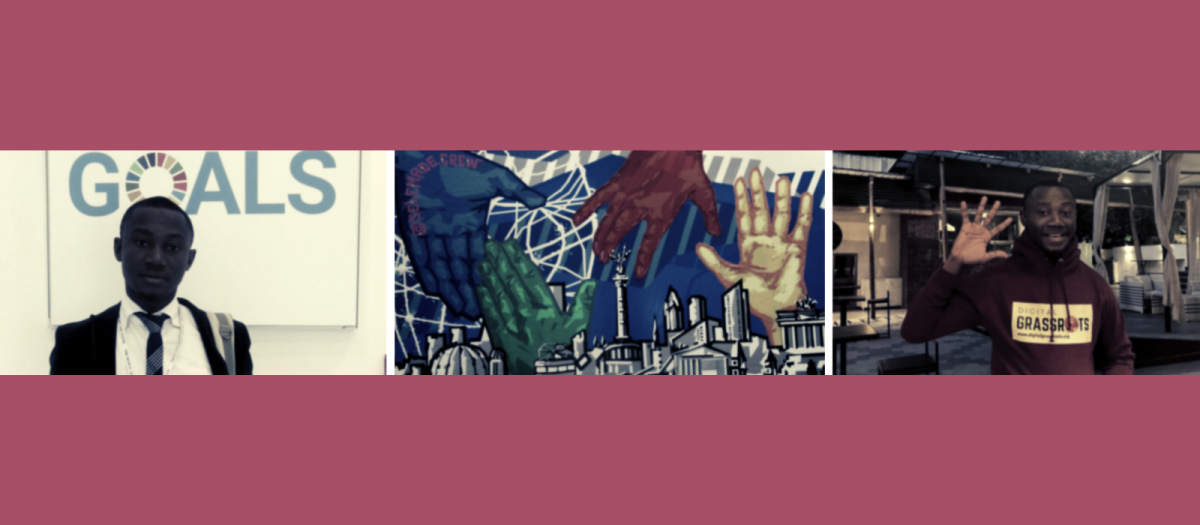
A Young Internet Leader Shaping Internet Governance: Celebrating Rachad Sanoussi’s Impact

By Muhammed Bello Buhari | July 24, 2023

In the vast digital landscape, where powerful entities exert control, there are young individuals who rise above, passionately advocating for a fairer, more inclusive internet. Today, we are honored to shine the spotlight on one of our community members our Technical Support Rachad Sanoussi, a remarkable young digital champion whose tireless efforts have made a profound impact on internet governance. Hailing from Benin, Rachad embarked on his journey to transform the digital landscape, armed with a deep understanding of the importance of Internet governance. As a student of computer science and telecommunications, he observed the challenges faced by his community in accessing and utilising digital technologies. Recognizing the centralization of power and the need for diverse voices to be heard, Rachad fearlessly stepped forward, determined to make a difference — to advocate for the voices of internet users, especially marginalised groups, in the decisions that directly affect them.


In 2019, Rachad was selected as an Internet Society’s Youth IGF Ambassador Fellow, granting him the opportunity to attend the 2019 Internet Governance Forum in Berlin, Germany. This experience deepened his understanding of Internet governance as he learned about global Internet infrastructure and policy and connected with a vibrant community of Internet governance professionals. It was during the forum in Berlin, while visiting the stands, that Rachad discovered Digital Grassroots, a platform that piqued his interest. Eager to learn more, he collected our flyers and stickers and explored our Ambassadors program.


Upon his return to Benin, Rachad noticed that Digital Grassroots had launched a call for applications for the Community Leaders for Internet Health program, a project that’s part of the Mozilla Open Leaders X initiative and supported by Mozilla Foundation’s Internet Health Report team. Being an advocate for open internet, he applied and was selected to participate. In early 2020, Rachad participated in the program, which he co-created for 2021. As part of his fellowship project, he collaborated with Internet Society Benin to map the history of the Internet in Benin. Rachad showcased his talent for connecting global organisations to local issues using a bottom-up, multistakeholder approach.


In August 2020, Rachad joined the board of Digital Grassroots, providing technical support. He started by becoming an active member of our online community of young internet governance activists, engaging in discussions, forums, and events to expand his knowledge of crucial internet governance issues. As his involvement grew, Rachad recognized that one of the most pressing challenges was digital access and inclusion. This realisation led to his participation in national and international internet governance meetings, including his first ICANN meeting.


Working with Digital Grassroots, Rachad curated the Community Leaders Program for Internet Advocacy, which focused on using the internet for democratic participation. Within Internet Society Benin, he collaborated with civil society associations through various actions such as digital campaigns and open letters. One notable achievement was advocating for the use of the internet to prevent an internet blackout during the previous presidential elections in Benin. His technical prowess combined with his active participation in dialogues on healthy internet, gender equality, and technology gives him unique insights into the challenges faced by underrepresented youth.


In 2021, Rachad continued his engagement in internet governance. He participated as a Fellow Participant in the Virtual Research Sprint titled “Toward an African Narrative on Digital Sovereignty” and also became a fellow of the Ghana School on Internet Governance. His dedication and contributions to internet governance education led him to receive the Youth Digital Champion Award from the mEducation Alliance.


At the 16th Internet Governance Forum (IGF 2021) held in Katowice, Poland, Rachad and a group of young people coordinated the work of the working group on Universal Access and Meaningful Connectivity. Together, they presented the results of several months of work at the IGF Global Youth Summit. Their Points of Action can be found here.


Throughout the years, Rachad has emerged as a leading figure in Internet governance in his region. His active participation has raised awareness among policymakers about key Internet governance issues and encouraged open and inclusive dialogue. In 2022, he had the privilege of attending the African School on Internet Governance (AfriSIG) organised by the Association for Progressive Communications (APC), and became a fellow twice in a row for two ICANN meetings.


Rachad’s dedication to promoting fair, transparent, and inclusive Internet governance has extended beyond his region. He has collaborated with activists worldwide, contributing to the creation of tools and resources that empower internet users better to understand the risks and challenges of internet governance. Recently, he was honored with the inaugural Paul Muchene Fellow Award at the ICANN 76 Community Forum.

Today, Rachad takes pride in his journey and the impact he has made on internet governance. He continues to work with unwavering passion and dedication, defending the rights of internet users and striving to build a more equitable and privacy-friendly digital future.


In 2019, at the Internet Governance Forum in Germany, I discovered Digital Grassroots while visiting the booths. That’s when I became fascinated with everything they do. I wanted to know more about their ambassador program and even collected their flyers and stickers. Back in Benin, I participated in their Community Leaders for Internet Health program, which provided me with invaluable knowledge on connecting global organisations to local issues using a bottom-up approach. Since then, I have joined their board as technical support, co-created youth programs, and actively engaged in discussions, forums, and events on critical internet governance issues. Through these endeavours, I strive to amplify the voices of youth and marginalised groups, ensuring that inclusion is at the forefront of internet governance agendas.


Together, let’s applaud Rachad Sanoussi as he continues to shape internet governance and inspires others to stand up for a fair and inclusive internet for all. His remarkable journey, fueled by passion and dedication, serves as a powerful reminder of the transformative impact that individuals can make in the digital realm. Through his unwavering commitment, he strives to ensure that the voices of internet users, especially marginalised groups, are heard loud and clear. Join us as we celebrate Rachad’s awesomeness, his outstanding achievements, and his ongoing efforts to build a more equitable, privacy-friendly, and empowering digital future.

We recently published our impact report, showcasing the incredible work Rachad has been shaping as part of our team. We invite you to explore the report here and discover the inspiring impact stories of other community members as well.


Digital Grassroots at RightsCon 2023: Empowering Young Leaders in the Digital Rights Space

By Muhammed Bello Buhari | July 8, 2023


Digital Grassroots, in a landmark partnership, teamed up with the RightsCon team to co-create and deliver the Young Leaders Summit (YLS), a key component of RightsCon 2023. We engaged from the preparatory stages, putting our expertise to work and shaping the event to effectively cater to young digital rights advocates from around the globe. RightsCon 2023 was a global event organized by Access Now that aimed to bring together over 8,000 participants from 174 countries to discuss and promote a rights-respecting digital future. With a diverse range of programming across 15 tracks, RightsCon provided a platform to address various topics and challenges related to digital rights. The event occurred in San Jose, Costa Rica, from 5th to 8th June 2023, with registrations to the various sessions open to the public.


Workshop: Movement Building for Youth at RightsCon

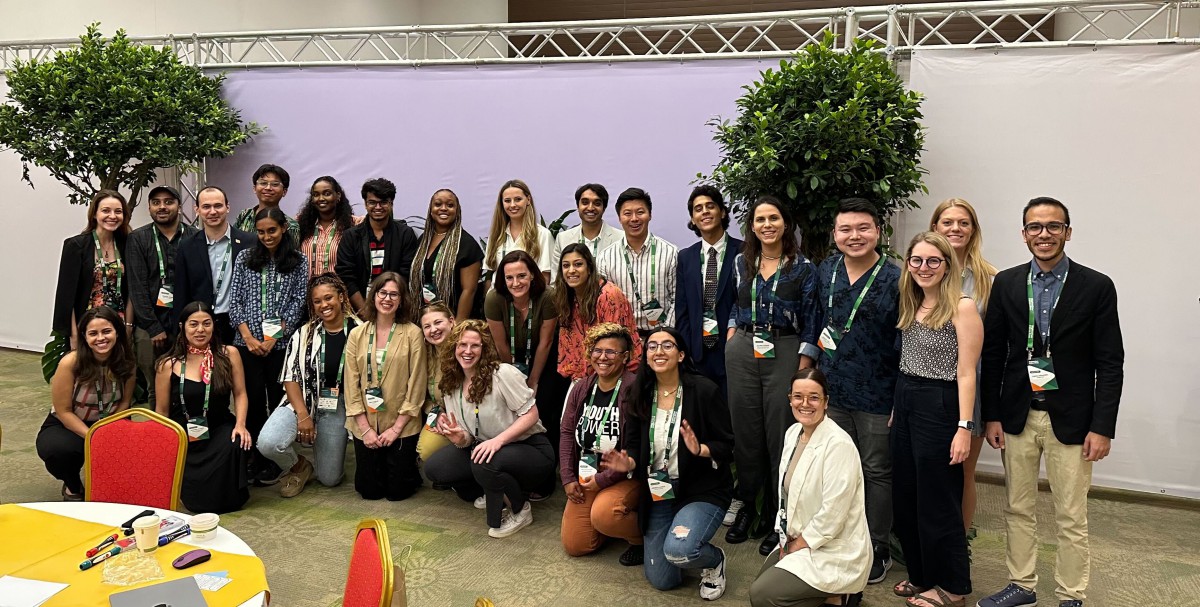
Our organization had the opportunity to contribute to the RightsCon Young Leaders Summit by hosting a workshop titled ‘Movement Building for Youth at RightsCon’ on June 5, 2023, which was facilitated by David Aragort, our stellar community member from Venezuela, researcher, and advocate in the field of tech, democracy, and human rights. David played a pivotal role in the workshop, adapting the session design and methodology to create a space that effectively married learning and networking. Leveraging his extensive experience, David ensured that the workshop catered to the needs of the participants, who were mainly newcomers to the RightsCon space.


In addition to his active role in facilitating the workshop, David further contributed to the event by actively participating and representing the youth voices of the global south. Drawing from his experiences on the ground, David shared invaluable insights, his perspectives shed light on the challenges and opportunities faced by young leaders advocating for digital rights in regions such as Venezuela, Cuba, and Nicaragua. Some of the key insights he shared during the event include:


  • The urgent need for increased international support and solidarity to amplify the voices of activists working in authoritarian states, address challenges they face and promote collaboration, knowledge-sharing, and open dialogue to counter digital authoritarianism.
  • The importance of leveraging innovative technological solutions to address censorship and surveillance challenges faced by digital rights advocates.
  • The importance of resources and support for youth engagement in digital rights advocacy, including networking opportunities and social spaces, to enhance the overall experience for newcomers and participants.
  • The significance of promoting digital literacy and skills training programs to empower marginalized communities in the global south and bridge the digital divide.


These insights from David underscored the critical role that youth leaders from the global south play in advancing digital rights, and they sparked meaningful discussions and exchanges among participants. We extend our gratitude to David for his invaluable contribution to the success of this workshop.


RightsCon Costa Rica Youth Social Hour

In addition to the workshop, we hosted the ‘RightsCon Young Leaders Summit Social Hour.’ This virtual session was facilitated prior to the Young Leaders Summit on May 29, 2023, by our Chief Strategist, Esther Mwema, our Global Lead, Uffa Modey, our Communications Lead, Hanna Pishchyk, our Programs Lead, Morisola Alaba, and our Tech Support, Rachad Sanoussi, brought together approximately 50 participants from over 20 countries. The social hour allowed young participants to engage with one another, build connections, and network. 


Our guest speaker delivered a presentation introducing attendees to the history, mission, and impact of RightsCon, while also sharing best practices and pathways for remotely participating in RightsCon Costa Rica. Participants were self-divided into three discussion groups based on their interests related to RightsCon and its key topics, focusing on connecting and networking, collaborations for digital rights advocacy, and available digital rights advocacy resources. The interactive format allowed participants to connect, exchange ideas, and explore potential partnerships. This session highlighted the significance of fostering international connections and cooperation among young leaders, paving the way for future joint efforts in promoting digital rights worldwide.


In conclusion, our organization’s participation in RightsCon 2023 proved to be a valuable experience. The Young Leaders Summit and its Social Hour provided meaningful engagement opportunities for young leaders, facilitating connections and collaborations. They highlighted the importance of interactive sessions, inclusive networking spaces, and ongoing discussions on pressing digital rights issues. 


Reflecting on the event, we also recognize the need to do more. We must strive to include more young people, particularly those from marginalized communities, in spaces like RightsCon. This year, the unfortunate reality of exclusion manifested when over 300 participants from less-recognized nations could not attend due to visa complications. Additional challenges emerged from financial constraints tied to visa procurement and travel expenses. These challenges are even more pressing for young people, who often lack the resources and support to participate fully. Therefore, it is our collective responsibility to advocate for more inclusive policies and measures that address these barriers, allowing for diverse and representative participation of voices at events like RightsCon. Moving forward, our organization remains committed to empowering young leaders, amplifying marginalized voices, and actively working towards a more inclusive and accessible digital rights landscape.

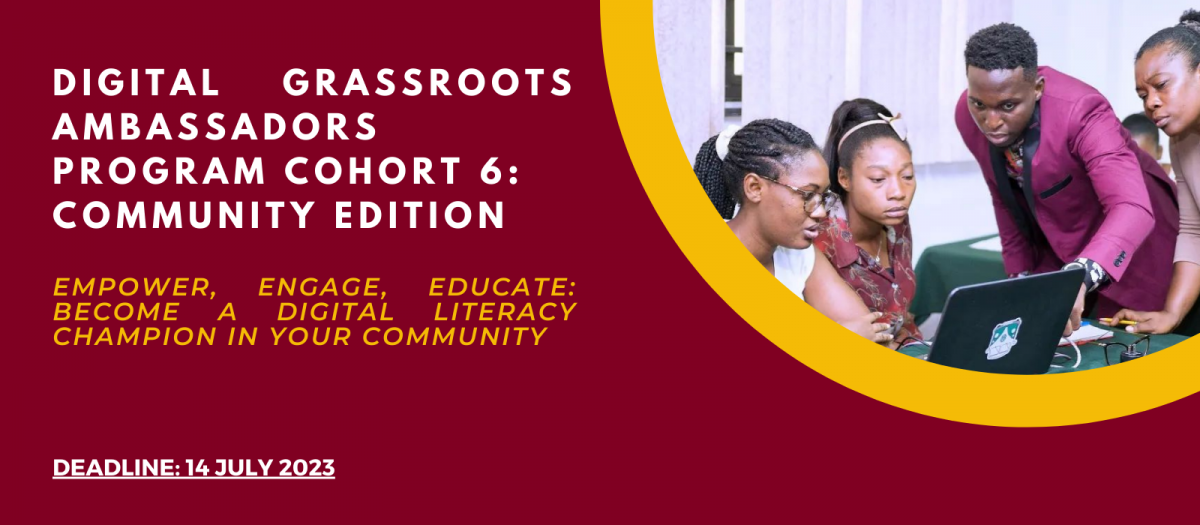
Leading Digital Literacy in Your Community: Apply for the Digital Grassroots Ambassadors Program Cohort 6

Are you a Digital Grassroots Ambassadors Program alumni interested in using the Internet as a tool for social good and development? We invite you to step forward for the community edition of our program, the Digital Grassroots Ambassadors Program Cohort 6.


The key objective of this edition is to equip our alumni to take on the role of digital literacy trainers, imparting crucial insights on Internet governance and digital rights to 15-20 young individuals (14-29 years old) from their local communities. This initiative is part of our ongoing commitment to fostering proactive youth participation in Internet Governance and endorsing Internet Literacy as an indispensable instrument for realizing Sustainable Development Goals (SDGs) 4, 5, 10, 16, and 17.


Key stages of the program include a 2-week onboarding for trainers, a 4-week online course phase where trainers guide their trainees through the Internet Literacy Course, and a concluding 2-week mentorship phase introducing trainees to the world of Internet Governance.


Program Timeline:


Onboarding and trainee registrations: July 31 – August 11, 2023

Online course phase: August 13 – September 9, 2023

Mentorship phase: September 11 – 22, 2023

Final presentations virtual event: September 22, 2023


If you’re aged between 14-29 years and dedicated to knowledge sharing and community engagement, we want you to apply. Thanks to our generous donors, we can provide a $500 stipend to all selected community trainers to support their internet connectivity costs during the program.


Applications are open until July 14, 2023. Successful candidates will be notified via email by July 21, 2023.


Join us in our effort to create a more inclusive digital future through community empowerment. 

5 Years of Building Future Internet Leaders: DIGRA Impact Report

By Muhammed Bello Buhari


Today is a big day for us here at Digital Grassroots!


We are excited to announce the release of our 5-year Impact Report, celebrating the great work that we’ve carried out over the course of our five years of existence in building future internet leaders by proactively engaging over 230 young people from underrepresented communities in over 65 countries globally while cumulatively facilitating over 190 community engagement projects in addressing internet-related issues in their communities through digital literacy, networking, and activism.


This 5-year Impact Report chronicles Digital Grassroots’ journey of increasing digital citizenship on Internet governance and digital rights among youth from underrepresented communities globally from inception in December 2017 till date. It highlights our inception stories; program offerings and how we have evolved over the years; reach and impact; young people and initiatives supported; mentors supporting our programs; partners collaborating, and various stakeholders enabling their work. It shows how we focus our actions on impact for a digital world that is inclusive, rights-respecting, and useful to all. It also demonstrates our desire to measure, in a concrete and continuous way, the impact of our actions on shaping the digital landscape for youth by youth, in connection with our ecosystem.


235 youths directly engaged in 67 countries across the world and 30 languages represented. 197 community engagement projects from 11 programs. 70 mentors and 32 trainers around the globe. This is a glimpse of what 5 years of Digital Grassroots look like in numbers. How do you translate such numbers into tangible impact? Do these results contribute to this healthier and more inclusive internet we’re committed to, and the Digital Grassroots team gets up for every day? All of Digital Grassroots’ results are featured in the Impact Report, showing the impact made from the start in 2017 to December 2022.


Finally, this report goes beyond numbers and shares stories from across the DIGRA community that demonstrate how connecting with our activities and diverse network of individuals and organisations, has impacted their personal and professional lives. We hope you enjoy reading our Impact Report. We are unstoppable together! 


Dive In: Read the report here or download the PDF below.


Gamified Learning for Internet Governance at MozFest 2023: Spotlight on Digital Rights Monopoly

By Muhammed Bello Buhari

The Mozilla Festival (Mozfest) is an annual convention hosted by the Mozilla Foundation to harness the collective power of partnerships. The festival brings together artists, public interest technologists, policymakers, and activists to creatively work together with the aim of creating trustworthy artificial intelligence and a healthy internet. 


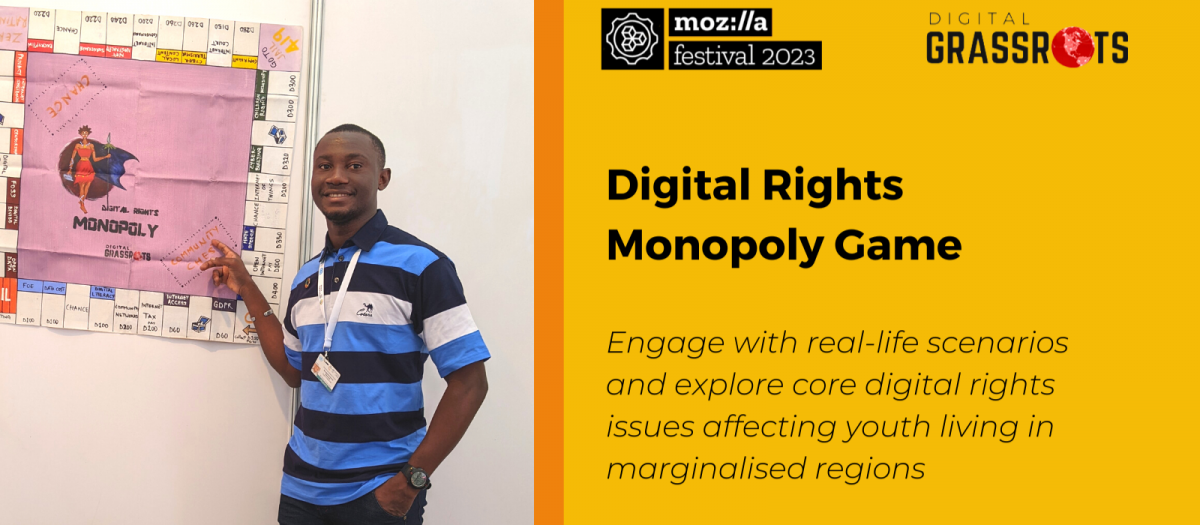
This year’s virtual event took place from 20th to 24th March 2023, with registrations to the various sessions open to the public. Digital Grassroots (DIGRA) hosted a workshop session on its Digital Rights Monopoly Game. This session was facilitated on March 23, 2023, by our founder and Chief Strategist, Esther Mwema, and our Co-founder and Global Lead, Uffa Modey, and moderated by Chrystal Bonzo. We gamified digital rights concepts through our ‘Digital Rights Monopoly’ and mapped the globe’s internet infrastructure to show why we need to ‘localize internet governance’ to maintain an open and equal internet. We built upon Mozilla Festival 2018, in which we showcased the Digital Rights Monopoly game to bring awareness to digital rights issues affecting the young people we are working with. In this session at MozFest 2023, we had open consultation on the game.


Our Global Lead, Uffa Modey, gave the background of the session. She introduced the participants to Digital Grassroots, and the Digital Rights Monopoly Game, where she mentioned that “the game was co-created by Digital Grassroots as a simulation game of Monopoly based on digital rights, abuses, and data breaches currently affecting youth living in marginalized regions. The digital rights issues featured in the game will represent the streets and utilities that are usually included in a Monopoly game. This version of web literacy engages players in a game to recognize global internet issues through our version of Digital Rights Monopoly by bringing to light Digital Grassroots’s work to bring internet governance to young people in over 40 countries. Digital Rights Monopoly is a game that reflects core digital rights issues affecting youth in marginalized regions and offers pathways to build a healthier internet in local communities. We are raising awareness of the varying digital rights circumstances across the globe through a reenactment of the game of Monopoly.” And then added that the MozFest session seeks to get input from the community on the Digital Rights Monopoly game.


Chrystal moderated the Roundtable Discussion for the community input on the Digital Rights Monopoly Game. Participants shared their thoughts on the game. One participant said, “in the age of Artificial Intelligence, games like DRM increase accessibility and community-centered contributions to the digital ecosystem.” Uffa talked about how games can reach underrepresented communities and how community-centered games shape understanding of AI. Then Esther closed the session by reviewing the recommendations made during the open consultation and collected the contacts of the participants who were interested in staying involved.


Digital Right Monopoly Game is a reenactment of the traditional game of Monopoly that adapts gamification and edutainment as a method for digital literacy for newcomers from the global majority to identify and address issues relating to the digital rights and internet governance space. In a game session, the participants will engage with an overview description of the common digital rights issues and encounter highlights and lowlights of digital rights real-life scenarios in Monopoly Chance and Community Chest.


Read about the session here, and if you’re interested in getting involved with this, you can contact us here.

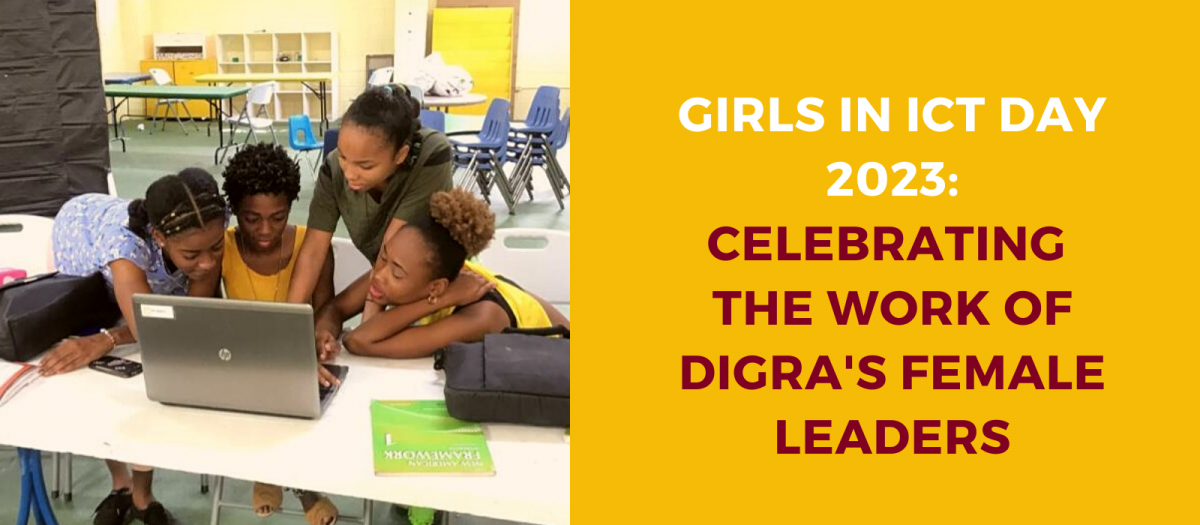
Girls in ICT Day 2023: DIGRA’s Female Leaders Championing Digital Skills and Community Empowerment

By Muhammed Bello Buhari

Digital Grassroots (DIGRA) recently joined the global community in celebrating International Girls in Information and Communication Technologies (ICT) Day. This event is held annually on the fourth Thursday of April under the International Telecommunication Union (ITU) initiative, aimed at empowering and encouraging girls and young women to consider careers in ICTs. This year’s celebration bore the theme “Digital Skills for Life.” To mark the occasion, DIGRA hosted a virtual roundtable discussion themed “Developing Digital Advocacy Skills through Community.”


The discussion was moderated by our Co-founder and Global Lead, Uffa Modey, and featured our Founder and Chief Strategist, Esther Mwema. The panelists comprised Mauricia Abdol Tshilunda, a DIGRA Community Leader for Internet Advocacy in South Africa, Ruth Atim, a DIGRA Ambassador and Community Leader from Uganda, and Lindsey Kukunda, an Alumna of the Digital Rights Learning Exchange Program from Uganda. Each of these women shared insights from their experiences advocating for digital rights within their communities, highlighting the importance of collaboration and the influence of women-led organizations. 


Ruth Atim shared about her project, ‘The School ICT Clubs’, an initiative under the Gender Tech Initiative organization she founded. The project liaises with school authorities to set up ICT clubs, training and empowering young girls through mentorship and career talks. “You’ll have to be patient. It’s not an easy field of work. The fact that my project runs most in rural [area] schools, and these are young girls who have not even touched a computer. So our journey starts with basic computer literacy; how to open a computer and how to type. It’s a slow journey with patience and commitment. And I’m enjoying it.” Ruth noted as she talked about the core lessons she learned from her experiences while promoting girls and women in the ICT sector.


Mauricia Abdol Tshilunda discussed her journey into Internet Governance starting in 2020, emphasizing the need for the inclusion of women and girls in every conversation. “There’s a platform that I’m actively involved in; that women and girls are included in every conversation.” she shared. Talking about the ways to foster collaboration and support networks among women and girls in ICT, Mauricia also noted that being intentional about the positioning as a woman is very relevant. She said, “Definitely get into the right communities, know where the conversations are taking place, and then use your agency to do it even while you’re afraid. Take a chance.


Lindsey Kukunda spoke about fostering a thriving digital space for women and girls in ICT and the critical role of female-led projects in building the confidence and capabilities of women in this sector. She said, “Experience sharing is crucial, and in doing so, women get solutions that are practical. They become so open when it’s other women speaking to them, especially confident women… For them, it blows their minds. There’s a sense of sisterhood when women are the ones who are leading programs like this. We need to help each other. We need to work together.


Following these discussions, an interactive session ensued, focusing on the impact of DIGRA on their advocacy and capacity building, as well as the role of organizations like DIGRA in shaping a conducive environment for women to connect skills acquisition with leadership and innovation in ICT. Ruth commended DIGRA for inspiring her growth, while Mauricia expressed gratitude for DIGRA’s continuous support since her induction as a community leader for internet advocacy in 2021. Lindsey said her engagement with DIGRA made her more intentional about her feminism. 


Our Founder and Chief Strategist, Esther Mwema, took the floor to commend the panelists on their inspiring work, emphasizing that their roles in the digital grassroots programs have inspired several participants. She highlighted the essence of International Girls in ICT Day, stating that the goal is to effect lasting changes and ensure community growth alongside individual growth. Concluding the Roundtable Discussion, Uffa Modey, the moderator, echoed DIGRA’s commitment to creating intentional pathways for women, especially those from underrepresented communities in ICT. She expressed the belief that such efforts are highly needed in the ecosystem to shape a more inclusive digital future.


You can watch the full Roundtable Discussion on our Youtube channel here.

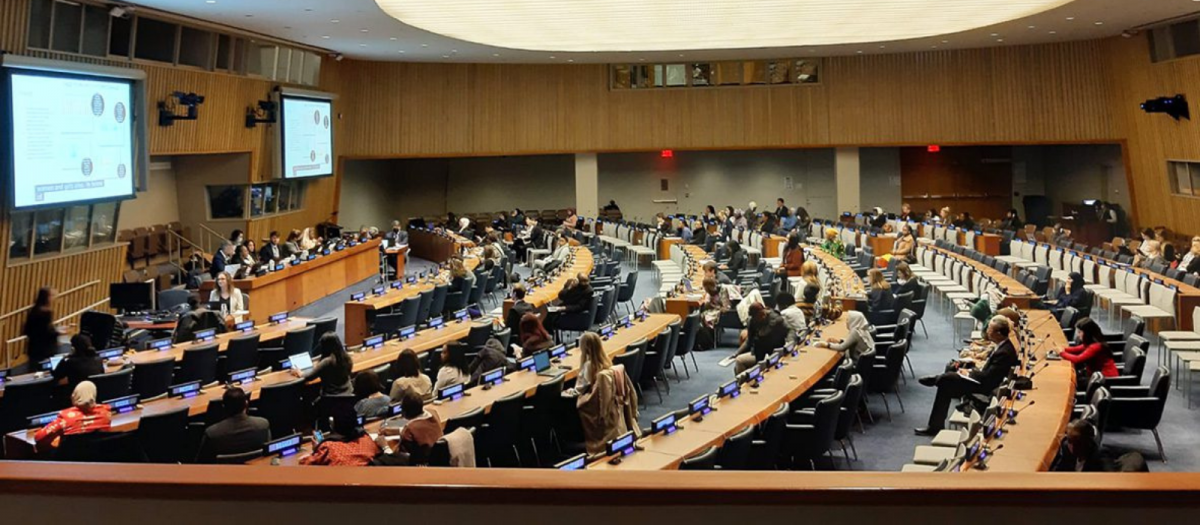
DIGRA at 67th Session on the Commission on the Status of Women (CSW67) in New York

By Muhammed Bello Buhari


In early March 2023, Digital Grassroots participated in the UN’s 67th Commission on the Status of Women (CSW) held at the United Nations in New York as well as NGO CSW. Standing as youth advocates, DIGRA delegates Esther Mwema and Nancy Wachira magnified the digital echo of women’s voices, highlighting the significance of fostering global bonds and empowerment among women in the tech realm.


The annual CSW conference brings together State Parties, non-governmental organisations (NGOs), and other representatives to discuss gender equality. This year’s theme was “Innovation and technological change, and education in the digital age for achieving gender equality and the empowerment of all women and girls”. This conference session is the first to be hosted in person post the COVID-19 pandemic.


But first, what are the UN CSW and NGO CSW?

The Commission on the Status of Women (UN CSW) is the principal global intergovernmental body exclusively dedicated to the promotion of gender equality and the empowerment of women. The NGO Forum of the Commission on the Status of Women (NGO CSW) is the civil society side of the United Nations (UN) Commission on the Status of Women (CSW). NGO CSW is a gathering of civil society actors that allows organizations and activists without the required Economic and Social Council (ECOSOC) accreditation or UN pass to participate in the UN CSW, to still engage in the CSW process.

KEY ACTIVITIES

DIGRA delegates engaged and participated in CSW67 through multiple avenues, including hosting an event in person, moderating, speaking, and attending the official meetings and events program. These activities are outlined below.

  1. Speaking Events

» CSW67 Consultation Day – Generation Equality Leads Panel


CSW67 & Generation Equality: Committing to Achieving Global Gender Equality

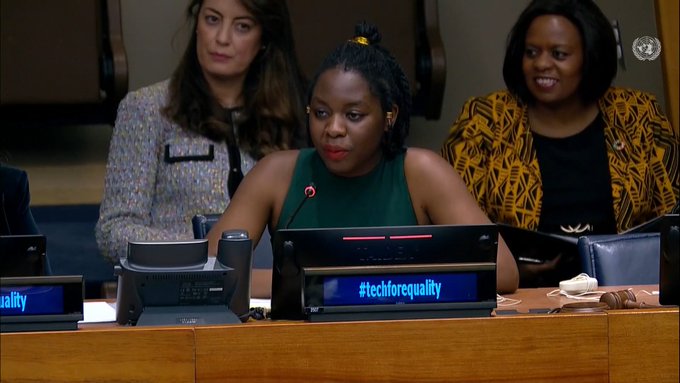
Before attending the UN CSW67, DIGRA Founder, Esther Mwema participated virtually on this panel that aimed at sharing information about Generation Equality and the opportunities for engagement in 2023 as a panelist. As the only youth leaders in #GenerationEquality Action Coalition on Technology and Innovation for Gender Equality, Esther shared our commitments as an Action Coalition, how they relate to the current CSW and International Women’s Day, and how people can connect for Action Coalition. Watch the full event here.

» Opening panel for CSW67 ‘Open, Safe and Equal – Shaping a feminist digital future’


High-Level Panel Title: Stronger Together

This High-Level event, co-sponsored by UN Foundation, will bring together leaders from Governments, CSOs, Women Activists, UN agencies, and the private sector in a concerted focus on the CSW67 priority theme and the ‘once in a generation’ opportunity it presents to place gender equality at the heart of the digital revolution.

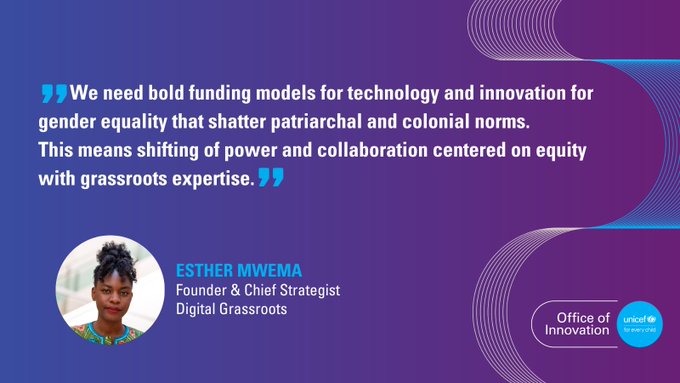
For Digital Grassroots, as the only youth leader in the Action Coalition on Technology and Innovation for Gender Equality, CSW67 represents a unique opportunity to cement its vision of a gender-equal digital future, paving the way for a concerted push forward in 2023. “We need to ensure a strong legacy for this CSW. We are stronger together”, our founder, Esther Mwema, said as she moderated and facilitated the opening panel and presented what excites her about the CSW and what is at stake with this year’s topic. She was joined on stage by 3 UN Under Secretaries-General, who have made inspirational commitments to advance gender equality in the digital world, Sima Sami Bahous of UN Women, Catherine Russell of UNICEF, and Doreen Bogdan-Martin of ITU.

Watch this high-level session here. You can also watch a short clip of our Founder, Esther moderating the Opening Panel here.

CSW_Esther Mwema

» Joint Side event CSW67


Panel: New Frontiers in Skills4Girls

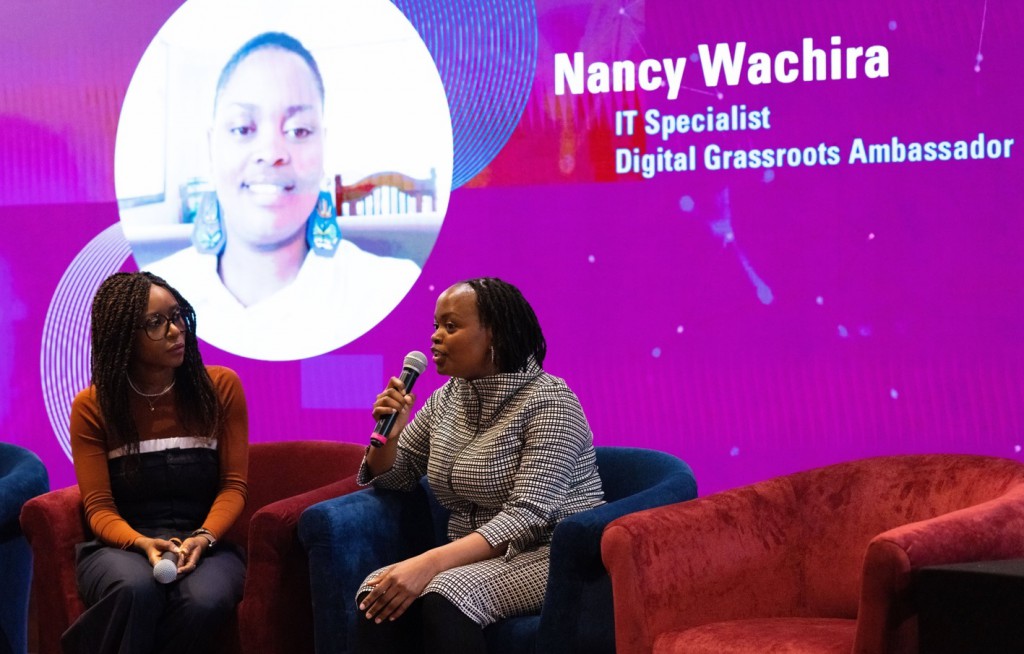
Digital Grassroots, together with the  Government of Finland, the Government of Sweden, UNICEF, and Women in Games, co-hosted this side event to raise awareness of current and new initiatives that bridge expertise from global grassroots solutions and gaming and technology industries – including via innovative finance instruments- as collective partners to advance tech, digital creativity, and design skills for and with girls. Watch one of our delegates and Digital Grassroots Ambassador, Nancy sharing her personal reflection here.

Nancy Wachira for CSW67

» UNICEF Roundtable Discussion


Roundtable Title: Financing Outcomes for Girls and Women

In this roundtable co-hosted by the Government of Finland, UNICEF, and UNCDF, participants aligned around a collective vision to work towards financing outcomes for girls and young women. As the youth representative, Digital Grassroots, represented by Esther Mwema, highlighted the importance of digital connectivity and skilling for girls and young women to bridge the gender digital divide.

  • image3

» CSW67 Youth Forum Event


High-Level Panel Title: Access, Ecosystems, Design, and Safety: A Call-to-Action for Policymakers and Stakeholders

Generation Equality youth and adolescent leads and UN Women convened an in-person CSW67 Youth Forum in New York City. The Youth Forum was a vibrant and dynamic engagement space where young people networked and interacted with decision-makers. As Action Coalition Youth Leader for Technology and Innovation for Gender Equality, Digital Grassroots’ Esther participated as a stakeholder and talked about what needed to be done to ensure meaningful localization of digital technologies. Other speakers were Sima Sami Bahous, UN Women Executive Director, Lynda Diseru Tabuya, Minister of Women, Children and Poverty Alleviation (Fiji), Marija Vasileva-Blazev, Officer-in-Charge, Secretary General’s Envoy on Youth, Sivananthi Thanenthiran, Executive Director, Arrow (Indonesia), Ana Gabriel Zúñiga Aponte, Iniciativa Latinoamericana por los Datos Abiertos (ILDA), Costa Rica, Elizabeth Segal, Working Group on Girls (USA).

  1. Non-speaking Events

The Action Coalition had its first in-person meeting in connection with the CSW session hosted by Finland. The most important outcome of the meeting was the desire and need to intensify cooperation to achieve the Action Coalition’s goals. Other non-speaking events Digital Grassroots participated in are the Women in Stem presentation of research papers hosted by LinkedIn and Microsoft, the Feminist Accountability Framework hosted by Global Fund for Women, and the Women’s Rights Caucus Press Conference.

  1. Media and Communications

Throughout the conference, Esther provided updates to our community on both delegates’ activities through:

DIGRA Youtube Channel:

UNICEF Side Event Video (Nancy Wachira)

Youth Forum Event Video (Esther Mwema)


Blog articles:

Epic Wins Generation Girls Blog co-authored by our founder, Esther Mwema, together with Riitta Swan, and Patty Alleman

Transforming internet governance to eliminate online inequalities Blog by our founder, Esther Mwema


Our various social media handles: Twitter and Facebook

Conclusion: Why did DIGRA participate in NGO CSW Forum 67 and UN CSW 67?

For UN CSW67, Digital Grassroots, as the only youth leader in #GenerationEquality Action Coalition on Technology and Innovation for Gender Equality, sent two delegates, Esther Mwema, Founder and Chief Strategist, and  Nancy Wachira, Digital Grassroots Ambassador, who worked together with their diverse skill sets to amplify the voices of women and girls to be architects of the digital future and the various issues currently facing women. As a female-led organization, we believe in empowering women and girls to be architects of the digital future. The discussions that happen at the UN CSW forum, the agreements that come out of this space, and the advocacy engagement that takes place both at the UN CSW forum and the NGO CSW Forum are relevant – and have a potential impact on DIGRA’s work and the work of our partners.


We participated in learning, networking, and identifying opportunities to be connected and in solidarity with other struggles within feminist movements. Our participation is also part of a process of visibility and amplification of the work, voices, and commitments of our partners globally; and our dedication to ensuring their connection to and inclusion in global movements and spaces. We appreciate and thank UNICEF, UN Foundation, and Global Fund for Women for sponsoring us to participate in person in New York.

Empowering Youth in Internet Governance: An Interview with Allan Magezi

As we gear up for the release of our impact report, highlighting stories of our community members, it is our pleasure to bring you an engaging conversation with Allan Magezi, a DIGRA Ambassador from Uganda and a telecommunications engineer championing internet access and connectivity. Our Communications Lead, Hanna, had the opportunity to sit down with Allan and discuss his experiences and aspirations as a Digital Grassroots Ambassador. Here’s what he shared:

HannaHi Allan, thank you so much for joining and expressing your interest in sharing the story. Could you introduce yourself briefly?


AllanThank you so much, Hanna. My name is Allan Magezi. I’m a telecommunications engineer. I am trying to advocate for access and connectivity because I come from a region where we have varying issues in terms of connectivity. For example, we still have 3G, while other communities already have 4 and 5G. So these are kind of the issues that ignited me to join the space, besides, of course, being a telecom engineer that is by default supposed to be contributing to that space.


HannaHow did you learn about Digital Grassroots, and what motivated you to join the DIGRA Ambassadors program?


AllanI actually participated in the DIGRA Ambassador program Cohort 5. Before the call for applications, Uganda had hosted the Africa Internet Summit. I was fresh from campus and was actually doing an internship at the Ministry of ICT & National Guidance, which has the mandate to run the entire internet infrastructure and telecom industry in the country. A couple of colleagues of mine shared with me that if you want to advance your knowledge and learning, especially in line with Internet governance, there’s a program here, give it a shot. So there we go, I applied and was selected, and the rest started evolving from there.


HannaWhat was the program experience like for you? I am particularly curious to hear this because you coordinated your cohort’s biggest and only group community project. 


AllanYes, the experience started on a very fascinating note. At that time, we were in the Covid era and relied on the Internet for everything we did. So doing the training program, especially online, was quite fascinating. But the first pillar was how the program was run. It was very exciting to see people from different walks of life and countries coming together to learn how the Internet is governed and trying to acquire more resources and knowledge. It opened a wider perspective for me to learn as well as network. As for the networking aspect, it was a requirement of the program for us to come up with a certain project, either individually or as a group. In my case, I mobilized a number of participants who were in the program. I felt that when you come up with a project as a group, it is much more effective as it reflects insights from different communities. It was seven of us from a different country. I remember we had Madagascar, Nigeria, Ghana, Kenya, and Burkina Faso. We came together and connected with our communities to spotlight different digital issues, especially cyber harassment. I remember we also ran a poll on how confident people felt about the Internet and how they responded. Everything was being done on the internet, and we felt that the responses from the community were actually a reflection of what was happening on the ground. 


HannaDo you think this kind of international and cross-cultural experience during the program helped you expand your understanding of digital rights and Internet governance issues across different contexts and seek insights that you can apply to your community?


AllanAbsolutely. At that time, I worked in telecommunications, mainly with community connections. I had a hands-on role, working with laying optic fibre cables and setting up towers for infrastructure to enable people to access the internet. However, this experience changed my perspective, and I realized I needed to focus more on policy within the ecosystem. Since then, I have contributed significantly to forming and discussing various policies and regulations, both nationally and across borders. I remember that at that time, my knowledge from this experience, especially regarding governance, led me and a few colleagues to establish the first youth Internet governance forum in Uganda. This experience opened up cross-border knowledge and introduced me to people from different countries, not just from East Africa or Africa. It was a great opportunity for networking, and I still keep in touch with many of the participants I met during the program. In fact, I continue to meet some of them at summits and forums, like when IGF 2022 was happening in Addis Ababa, and we came together to contribute to the event as a DIGRA community. This experience allowed us to build a resilient network that positively impacts the internet space. 


HannaWhat role do you think the community component of Digital Grassroots plays in building a network of youth activists in the space?


Allan: First of all, I should mention that this is an entirely youth-driven ecosystem. We are very glad that Digital Grassroots is focusing on the youth narrative. I can tell you that this gradual engagement with Digital Grassroots has opened up many opportunities for me. And I never stopped from that time. I remember engaging with several big players, particularly organizations that contribute significantly to the ecosystem, all while coming from my background in telecommunications engineering. So I had already, by default, felt it was incumbent on me to contribute to some processes available in international telecommunications engineering, such as ITU. We are glad that last year, ITU provided an opportunity to build up a youth generational connection, a youth narrative for people to contribute to ITU processes. Remember, ITU is a multilateral organization composed of governments, and for the Secretary General’s office to create a special section for youth to contribute was a massive achievement. So, I dived into that, largely due to the background laid by Digital Grassroots. 

I also engaged with ICANN, as you can’t do without some of these major organizations that play a critical role, especially in managing internet resources. This engagement opened doors for me to participate in ICANN meetings. This experience allowed me to learn and contribute significantly to the internet space. Later, I was not only selected to attend another meeting [ICANN 77], which will happen this June in Washington DC, but was also awarded the Paul Muchene Award, an award given to a distinguished fellow from the African region for their contribution to the internet space. I’m the second recipient of this award, and I’m glad to follow in the footsteps of someone I look up to, Ben [Rachad Sanoussi, DIGRA Tech Support], who was the first recipient. 


HannaDo you think that organizations like Digital Grassroots contribute to bringing a more youth-led approach to these events and advancing the degree of youth participation in Internet Governance from often tokenistic representation to actual leadership and initiative? 


Allan: I think I should have mentioned this earlier. We had people from the health sector, the agriculture sector, but they were coming together to say, let’s see how the internet is run. Let’s build convergences in terms of policies, in terms of learning the policies that are very reliable for the internet to prevail in terms of benefits. So that in itself, in this composition, was some sort of an indicator of stakeholders in terms of youth, bringing youths from different spaces to come and talk about how the Internet should be governed. So I think Digital Grassroots still brings up that aspect of multi-stakeholder, which I think, by the way, for the record, is one of the most recommendable approaches to how the internet should be governed. 

Hanna: It’s actually an interesting take. As you remember, we had so many different projects in your cohort, from cybersecurity issues to child protection, and gender-based violence. It’s great to see this power that we can harness when we don’t have a very restricted view of how we can contribute to the space. 

Allan: I entirely agree with you. Sometimes, people from different spaces shy away. It is a challenge, but here is the encouragement: Digital Grassroots has been bringing people together. There’s always a mentor assigned to you, someone who takes you through how the ecosystem runs, someone who understands your background. For instance, if you’re from the health sector, a mentor will help you appreciate the system and how the space runs, and then they’ll build you up through capacity training. Digital Grassroots has tremendously built capacity in terms of youth, and we have many people trying to contribute to the ecosystem because of the mentoring and training they receive through programs like the DIGRA Ambassadors.

HannaWere there any projects or initiatives that you got engaged with following the Digital Grassroots Ambassador Program? 


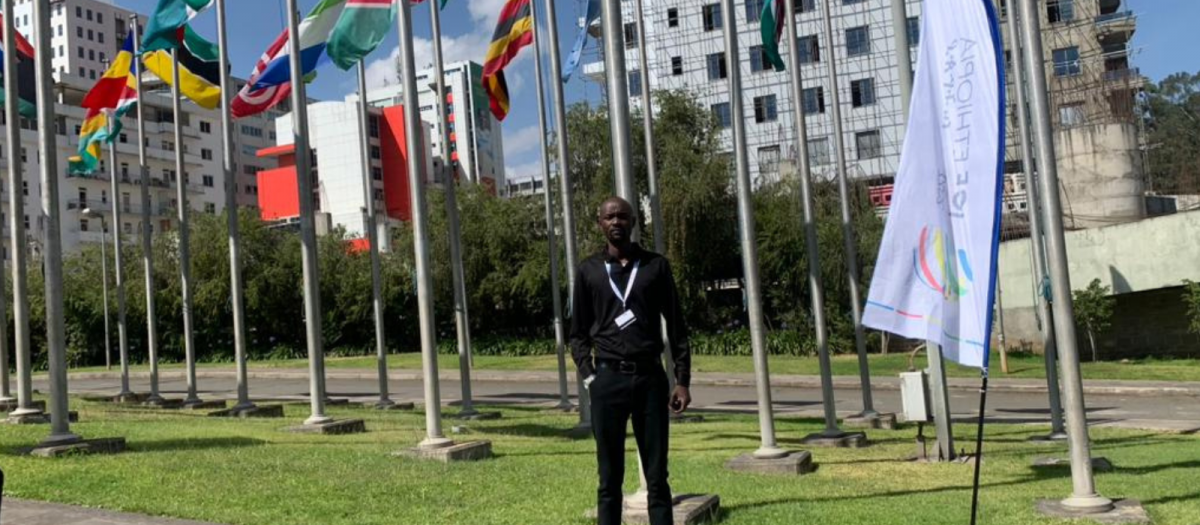
AllanThere are many, including international engagements, national engagements, and regional engagements. Let me start with the international engagements. Last year, we visited Ethiopia, where Africa hosted the global Internet Governance Forum. I was able to offer technical support, ensuring people joining the meeting virtually had a real feel and contributed conveniently during the different sessions held during the forum. For me to be able to offer that technical support in the control room was because of the background and channel of Digital Grassroots. I remember we were selected based on our professions. We had people with technical backgrounds and others from various professions. But because of my technical background, backed up by my experience and training from Digital Grassroots, I was able to convince the selection team that I could provide the right support during the meeting. I can assure you it was a very successful meeting. We had over 5,122 participants from 120 countries. It was one of Africa’s most fascinating and successful Internet Governance Forums. Then, if I can touch on the national level like I mentioned before, we started the Uganda Youth Internet Governance Forum with a couple of friends who were trained and have been through Digital Grassroots programs. We started the Uganda Youth Internet Governance Forum. Some of us, like myself, are already contributing to the steering committee of the National Internet Governance Forum, and we’ve supported the East African Internet Governance Forum. These channels have been laid out as a result of Digital Grassroots. Additionally, my cohort from the Digital Grassroots program still works together, especially regarding resource sharing with all the participants from that program. We’re still connected up to now. We virtually attend regional engagements like the Digital Inclusion Forum in Kenya and the Africa DNS Forum. 


HannaWhen you reflect on your experience as a whole, from where you started and where you’ve gone since participating in the Ambassadors Program, what program aspects do you think have been the most defining for your journey?


Allan: From my experience, one of the most fundamental aspects is how my trajectory has changed since I engaged in the program. I was fortunate to engage in the program right after school. It’s different when you engage in this program, maybe three or four years after campus, but it’s different when you have this program right after school when you’re trying to figure out which space you will take. Initially, my focus was working with different organizations and community companies to lay out infrastructure since that was my professional background to help people gain access and connectivity. I can tell you that most of the African continent is young, and this demographic engages the most on the internet. So for us, having a contribution to how the policies are run and managing the internet space was very important to me. After participating in the DIGRA Ambassadors Program, I changed my trajectory to contribute more to policy rather than the practical part of fixing optic fibre cables. 


HannaAnd finally, I would like to ask you whether there is a particular moment or experience when you felt most excited or proud to be part of our community. 

Allan: First of all, everyone on the Digital Grassroots team is amazing. I want to give you, Uffa, Esther, and my good friend Ben a special shoutout. The team is very fascinating and enjoyable. I remember even when I didn’t have much time for social events or social hours, especially after meetings, I could still catch up a bit late at night, and it was very fascinating for us. As young people, we like to have fun, but also in a meaningful and constructive manner. 


We’d like to thank Allan for sharing his inspiring journey with us and shedding light on the importance of youth engagement in digital rights and Internet governance. As we look forward to our upcoming impact report, we’re excited to share more stories highlighting the impact Digital Grassroots programs continue to have on young individuals and communities worldwide.